
How to Stop Your Dog from Chewing Shoes, Furniture & Slippers
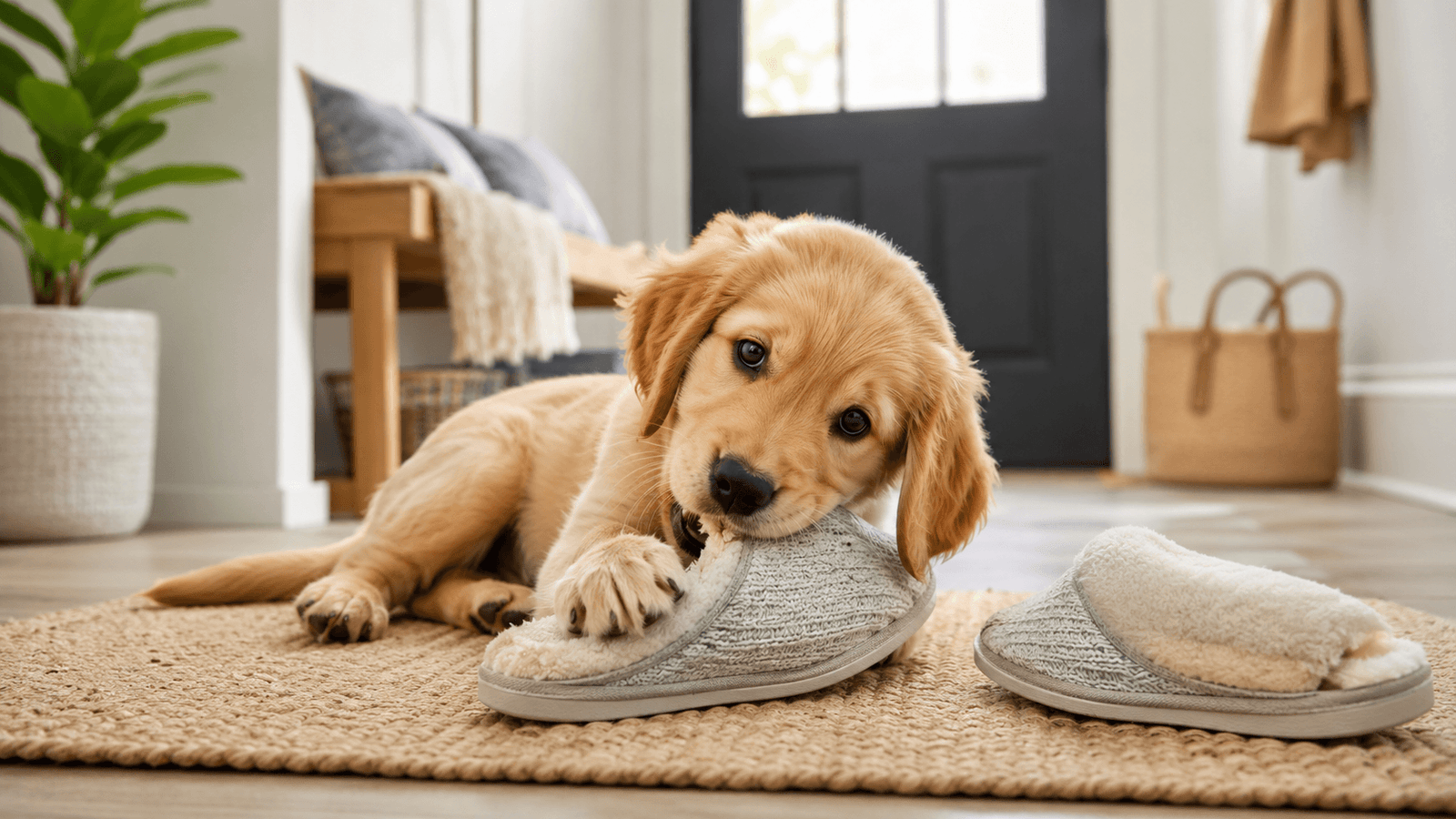
Every dog parent knows this moment: you come home, and your slipper has become a snack. Or your table leg suddenly has tiny teeth marks. Chewing is one of the most common dog behaviours, and while it can be frustrating, it is also completely natural.
Dogs chew to explore, relieve boredom, reduce stress and, in puppies, soothe teething discomfort. The ASPCA notes that chewing is normal for dogs and can help puppies deal with teething pain while helping older dogs keep their jaws active.
The goal is not to stop chewing completely. The goal is to redirect chewing to the right things.
Why Dogs Chew Shoes and Furniture
1. Teething
Puppies chew because their gums feel uncomfortable when new teeth are coming in. Shoes, slippers and soft furniture corners feel satisfying to bite.
2. Boredom
A bored dog will find entertainment. If they don’t have toys or chews, they may choose your sofa, cushion, shoes or wires.
3. Anxiety
Some dogs chew when they are stressed, lonely or left alone for long hours. This is common in dogs who have separation anxiety.
4. Attention-Seeking
If every time your dog chews a slipper, the whole house reacts, your dog may learn that chewing gets attention.
5. Lack of Chew Options
Dogs need safe things to chew. If they do not have proper chew sticks or toys, they will pick whatever is available.
How to Stop Destructive Chewing
1. Don’t Punish After the Damage Is Done
If your dog chewed something 30 minutes ago, they will not understand why you are scolding them now. Instead, focus on prevention and redirection.
2. Redirect Immediately
If you catch your dog chewing something inappropriate, calmly take it away and give them a chew stick or toy instead. When they chew the right thing, praise them.
Veterinary behaviour guidance often recommends redirecting dogs to appropriate chew items and rewarding them for choosing the right object.
3. Keep Shoes and Slippers Out of Reach
This sounds basic, but it works. Keep tempting items away until your dog learns better chewing habits.
Use closed shoe racks, storage baskets and pet-safe spaces.
4. Give Daily Chew Time
Chewing is mentally relaxing for dogs. Give them a dedicated chew stick when they are most likely to get bored — after meals, when you’re working or when they are left alone for a short while.
5. Exercise Your Dog
A tired dog is less likely to destroy furniture. Walks, playtime, training and sniffing games can reduce destructive chewing.
6. Use Taste Deterrents Carefully
Some pet parents use bitter sprays on furniture. Humane World notes that taste deterrents can make furniture less appealing, but dogs should be supervised when trying them because some may still chew despite the taste.
7. Manage Alone Time
If your dog chews only when left alone, it may be linked to anxiety. Start with shorter alone-time practice, enrichment toys and a calm routine before leaving.
For severe anxiety, consult a vet or behaviourist.
What Should Dogs Chew Instead?
Good chew options should be:
Chew sticks and bones can be a great way to redirect your dog’s chewing habit in a healthier way.
Your dog is not chewing your shoes to annoy you. They are chewing because it is natural, satisfying and sometimes emotionally comforting. With the right routine, enough exercise and safe chew options, you can protect your slippers and keep your dog happy.
Try Mysons Chew Sticks & Bones
Mysons Chew Sticks and Bones are made to keep dogs engaged, satisfy their natural chewing instinct and redirect them away from shoes, furniture and slippers. Perfect for daily chew time, boredom control and happy jaws.
Shop Mysons Chew Sticks & Bones on www.shopmysons.com
Tags